Rubber Powder Modified Asphalt How Ground Tire Rubber Is Used in Asphalt
Rubber powder modified asphalt uses processed recycled tire rubber as part of a specified asphalt system. The rubber may be incorporated through different processes depending on the pavement technology, binder system and mix design.
Our factory manufactures recycled rubber powder in Egypt for export to asphalt producers, road-material suppliers, importers and industrial buyers requiring specified ground tire rubber particle grades.
The required rubber particle size, quantity and incorporation method are determined by the asphalt technology and project specification.
What Is Rubber Powder Modified Asphalt?
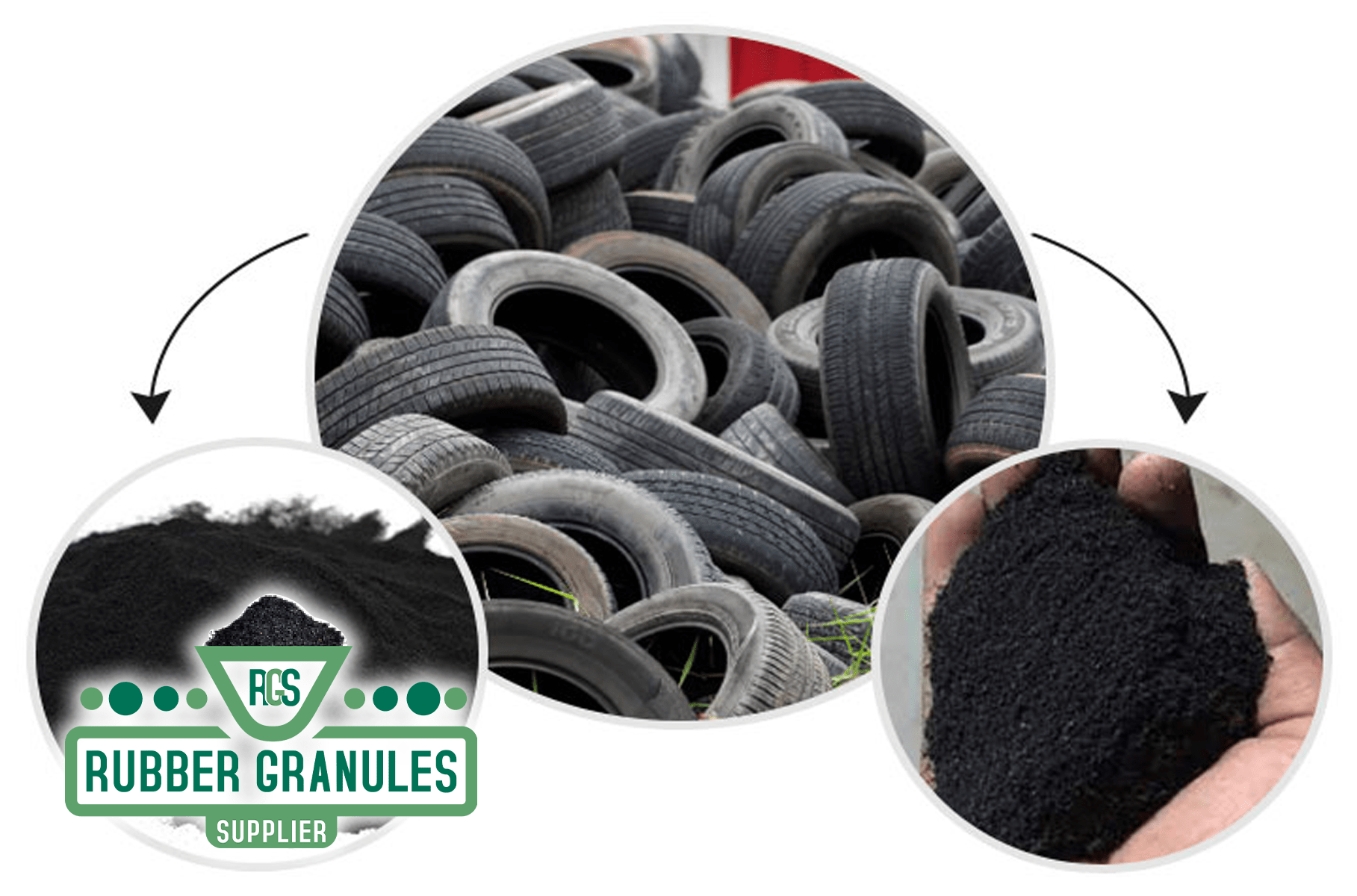
Rubber powder modified asphalt is an asphalt system in which processed tire rubber is incorporated according to a defined mix or binder design. The recycled rubber is commonly described as ground tire rubber, crumb rubber or crumb rubber modifier.
Recycled Tire Rubber
Used tires are processed to recover rubber material that can be reduced into specified particle grades.
Ground Tire Rubber
Ground tire rubber is a common term for processed recycled tire rubber used in asphalt-modification technologies.
Asphalt Modification
The rubber is incorporated into the binder or asphalt mixture according to the selected process.
Engineered Mix
Rubber particle size and content form part of the complete asphalt design rather than being selected independently.
From Recycled Tire Rubber to Asphalt Raw Material
Ground tire rubber is produced by processing recycled tires and reducing the recovered rubber into smaller particles. Non-rubber components are separated during processing before the rubber is prepared into the required particle grade.
For asphalt applications, the material can be specified by mesh, sieve range or particle-size distribution. The exact requirement depends on how the rubber will be incorporated into the asphalt system.
This distinction is important because rubber-modified asphalt is not based on one universal rubber powder size.
How Rubber Powder Becomes Part of Modified Asphalt
Recycled Tire Processing
Tire rubber is recovered and processed into reusable rubber material.
Size Reduction
The rubber is reduced and classified according to the required particle grade.
Asphalt Incorporation
The specified rubber is introduced using the selected wet or dry asphalt process.
Final Asphalt Mixture
The rubber becomes one component of the complete engineered pavement system.
Rubber powder is one input. Binder characteristics, aggregate, rubber gradation, rubber content, production conditions and construction all form part of the final pavement design.
Wet Process vs. Dry Process in Rubber Modified Asphalt
The two commonly discussed approaches differ primarily in where ground tire rubber is introduced into the asphalt system.
Ground Rubber Modifies the Binder
In a wet process, ground tire rubber is blended with asphalt binder before the modified binder is combined with aggregate. The required rubber grade depends on the binder technology and specification.
Ground Rubber Enters the Asphalt Mixture
In a dry process, recycled tire rubber is introduced during asphalt-mixture production instead of first producing a separate rubber-modified binder. The particle distribution depends on the selected process and mix design.
They incorporate recycled tire rubber differently and can require different material specifications. Follow the selected asphalt technology and project design when specifying the rubber powder.
Rubber Powder in Asphalt Binder Modification

When a wet process is specified, ground tire rubber is blended with the asphalt binder. The rubber interacts with the binder under controlled production conditions before the binder is incorporated into the asphalt mixture.
Fine ground rubber is used in various binder-modification technologies, but the appropriate particle size depends on the specific system rather than on the term “wet process” alone.
For material supply, the required mesh or sieve distribution should be taken directly from the binder or project specification.
Rubber Powder in Dry-Process Asphalt Mixtures

Dry-process technologies introduce recycled tire rubber during production of the asphalt mixture instead of first modifying the binder in a separate blending stage.
The required rubber particle distribution varies according to the technology and mix design. A dry-process order should therefore identify the exact particle requirements specified for the system.
If the asphalt producer provides a complete gradation, that gradation should accompany the commercial inquiry.
What Rubber Powder Size Is Used in Modified Asphalt?
There is no single mesh size that defines rubber powder modified asphalt. Particle requirements can differ according to the asphalt process, binder technology, mixture design and project specification.
Mesh Number
A mesh designation can be used as a practical reference for a ground-rubber particle grade.
Particle Limits
A specification may define maximum or minimum particle sizes using individual sieves.
Particle Distribution
Some asphalt specifications define percentages passing different sieves rather than relying on a single mesh number.
If your project provides mesh, sieve or gradation requirements, send them exactly as specified when requesting recycled rubber powder.
Can 20 Mesh Rubber Powder Be Used in Modified Asphalt?
20 mesh is one particle-size reference that can appear in ground-rubber applications, including some asphalt-related requirements.
It should not, however, be treated as the standard size for every rubber-modified asphalt system. Other systems may require finer material or a different particle distribution.
If your asphalt specification calls for 20 mesh, order the material according to that requirement. If it specifies another grade, use the specified particle size instead.
The correct grade is determined by the asphalt technology and particle requirements, not by a universal size recommendation.
Rubber Powder, Crumb Rubber and Ground Tire Rubber
Different buyers and technical documents can use different names for processed recycled tire rubber. Understanding the terminology helps prevent confusion when requesting material.
Rubber Powder
A common commercial description for finely processed recycled rubber material.
Ground Tire Rubber
A widely used description for tire rubber processed into specified particle sizes.
Crumb Rubber
A term frequently used for recycled tire rubber particles, with particle size varying by specification.
Crumb Rubber Modifier
A term used when ground tire rubber is specified as a modifying material in asphalt systems.
Where Is Rubber Modified Asphalt Used?
Rubber-modified asphalt technologies can be specified for different pavement and road applications. The appropriate system is selected by the pavement designer or road authority according to the project requirements.
Road Construction
Ground tire rubber can form part of specified asphalt systems for new road pavement construction.
Road Resurfacing
Rubber-modified asphalt technologies may be specified in selected pavement rehabilitation and resurfacing work.
Asphalt Binder Systems
Wet-process technologies use ground tire rubber as part of an asphalt-binder modification system.
Asphalt Mixtures
Dry-process technologies introduce recycled tire rubber during asphalt-mixture production.
What Determines the Performance of Rubber Modified Asphalt?
The performance of a rubber-modified pavement cannot be attributed to rubber powder alone. The complete pavement system determines the final result.
Important factors include the asphalt binder, aggregate, rubber particle distribution, rubber content, mix design, production temperature and procedure, construction quality, traffic conditions and climate.
For this reason, rubber powder should be purchased according to the approved asphalt design rather than being expected to create the same result in every mixture.

What to Specify When Buying Rubber Powder for Modified Asphalt
| Requirement | Information to Provide | Purpose |
|---|---|---|
| Asphalt Application | Binder modification, asphalt mixture or road application | Identifies the intended use of the rubber material. |
| Process | Wet process, dry process or specified technology | Provides context for the required particle grade. |
| Mesh | Required mesh number if specified | Provides a particle-size reference. |
| Sieve Range | Minimum and maximum particle requirements | Defines particle-size limits when required. |
| Gradation | Percentage passing specified sieves | Defines the required particle distribution. |
| Quantity | Required commercial tonnage | Defines the volume of the order. |
| Packaging | Required packaging specification | Defines how the material should be prepared. |
| Destination | Country and port or city | Provides the information required for export supply. |
How to Request the Correct Rubber Powder for Your Asphalt System
Identify the Asphalt Technology
Confirm whether the project uses a wet process, dry process or another specified rubber-modified asphalt system.
Check the Rubber Specification
Find the required mesh, sieve limits or particle-size distribution in the project or production documents.
Define the Commercial Quantity
State the required tonnage and packaging requirements for the material order.
Provide the Export Destination
Include the destination country and port or city so the export inquiry can be prepared correctly.
Manufactured in Egypt for International Supply
We manufacture recycled rubber powder in Egypt for international buyers requiring ground tire rubber for asphalt and other industrial applications.
Asphalt producers, importers, road-material suppliers and industrial buyers can send their required particle specification, quantity, packaging and destination for an export inquiry.
Commercial supply through this website is for export outside Egypt.
Request Rubber Powder for Modified Asphalt
Send the asphalt and purchasing requirements below so the requested rubber powder grade can be reviewed against your project specification.
Explore Rubber Powder Products & Applications
Rubber Powder Modified Asphalt Questions & Answers
What is rubber powder modified asphalt?
Rubber powder modified asphalt is an asphalt system that incorporates processed recycled tire rubber according to a specified binder or mixture design.
What rubber is used to modify asphalt?
Processed recycled tire rubber, commonly described as ground tire rubber or crumb rubber, is used in various rubber-modified asphalt technologies.
What is ground tire rubber in asphalt?
Ground tire rubber is processed recycled tire rubber reduced into specified particle sizes for use in asphalt and other applications. It is commonly abbreviated as GTR.
What is crumb rubber modified asphalt?
Crumb rubber modified asphalt uses processed tire rubber as a modifying material within an asphalt binder or mixture according to the selected technology.
How is rubber powder added to asphalt?
Two common approaches are wet and dry processes. In a wet process, ground tire rubber is blended with asphalt binder. In a dry process, recycled tire rubber is introduced during asphalt-mixture production.
What size rubber powder is used in modified asphalt?
There is no single size for every system. The required mesh, sieve range or gradation depends on the asphalt technology, binder or mixture design and project specification.
Can 20 mesh rubber powder be used in modified asphalt?
20 mesh can be specified in some applications, but it is not a universal grade for all rubber-modified asphalt systems. It should be used when it matches the required particle specification.
What is the difference between wet and dry rubber-modified asphalt?
The main distinction is how the rubber is introduced. Wet-process systems blend ground tire rubber with asphalt binder before mixing with aggregate, while dry-process systems introduce rubber during asphalt-mixture production.
Is rubber powder the only factor affecting modified asphalt performance?
No. Final pavement performance depends on the complete asphalt system, including binder, aggregate, rubber properties and content, mix design, production, construction, traffic and environmental conditions.
Is rubber powder the same as crumb rubber?
The terms can overlap in commercial use. The purchasing specification should define the required particle size or gradation rather than relying only on the product name.
Where is your rubber powder manufactured?
Our recycled rubber powder is manufactured in Egypt and supplied through this website for international export orders.
Can you supply rubber powder according to an asphalt specification?
Send the required mesh, sieve range or gradation together with the quantity and application. The requested particle specification can then be reviewed for the commercial order.
What information should I send for an export quotation?
Send the asphalt application, wet or dry process if known, particle specification, quantity, packaging requirement, destination country and destination port or city.
Need Rubber Powder for Modified Asphalt? Send Your Particle Specification
Share the required mesh, sieve range or gradation together with the asphalt application, quantity, packaging and export destination.